Enter the password provided to continue.
Case Study
Workflows & User Journeys
Overview
It's easy to focus on the client side of a staffing platform and forget that recruiters are users too. This project addressed the recruiter-facing side of Randstad's global digital transformation — centralizing fragmented workflows, reducing manual work, and building a standardized global process that could scale across regions and unlock downstream products like the c-one client portal.
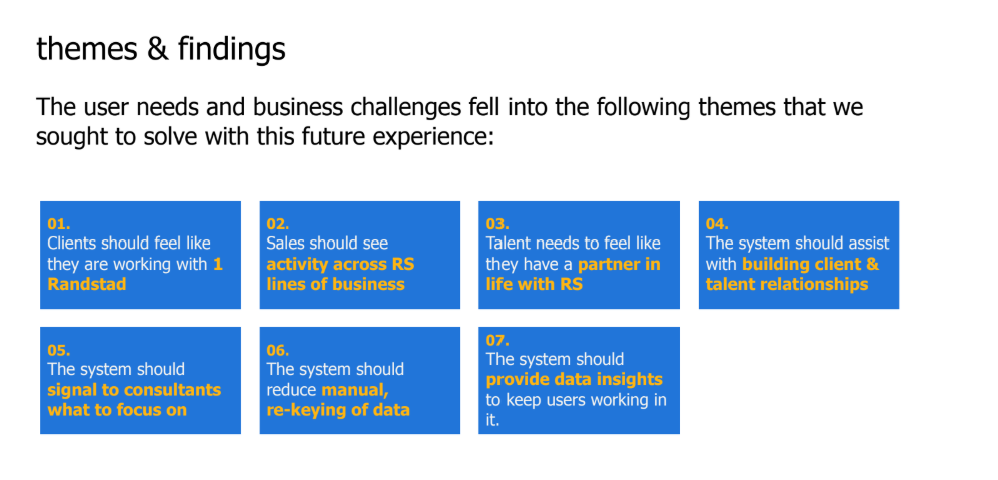
The business goal was straightforward: get recruiters working from a single system, reduce double-entry and inefficiency, and create consistency across a historically fragmented global organization. What we discovered was that the goal itself needed to be challenged — and that our job was as much about setting realistic expectations as it was about designing the right tool.
My Role
I led discovery and evaluative research with recruiters across multiple markets, building a picture of how recruiting work actually gets done versus how the business assumed it got done. A big part of the role was using findings to shift product strategy, not just shape design decisions.
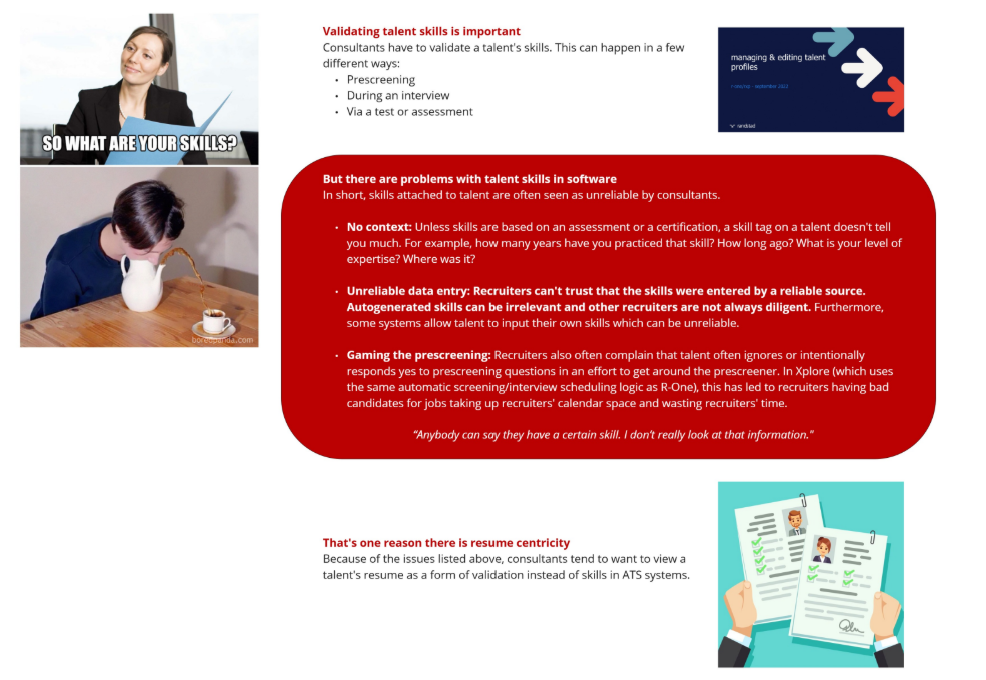
Key Findings
Impact & Outcomes
What I Learned
In a poorly organized organization, relationships matter more than process. Finding the internal champions first — the people who already believe research has value — and expanding from there was far more effective than trying to win the room all at once. Trust compounds slowly and burns fast.
I also learned to calibrate how academic to be. Going deep on methodology works with UX-mature teams. With teams earlier in that journey, it can backfire — it feels removed from the problem. The rigor stays the same. The translation changes.
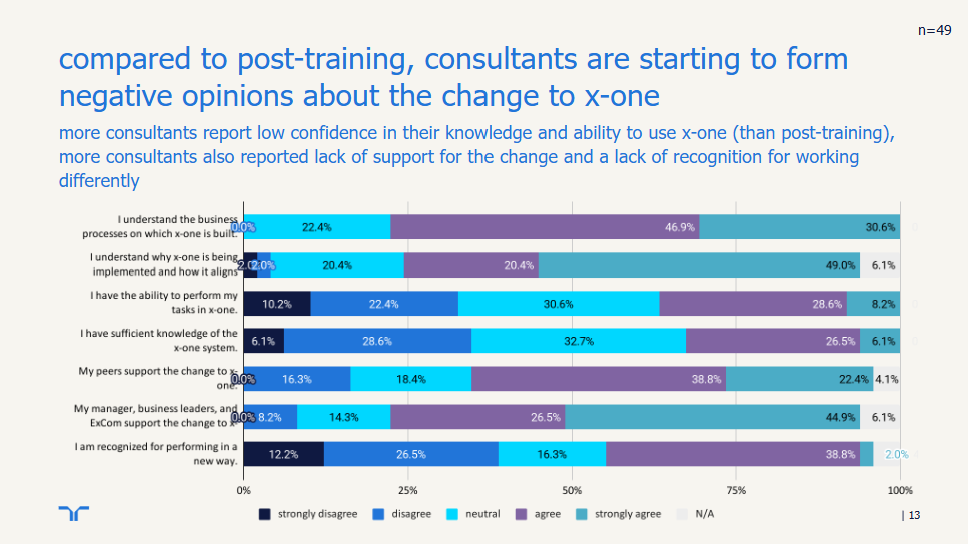
The hardest lesson: launching a bad product breaks trust in a way that takes a long time to repair. Users remember when something didn't work. You can't build back credibility just by fixing the bugs — you have to earn it again through the relationship. And you can't develop a product purely from business goals and expect users to meet you there. That's not strategy, it's wishcasting.