Enter the password provided to continue.
Case Study
UX Research
Overview
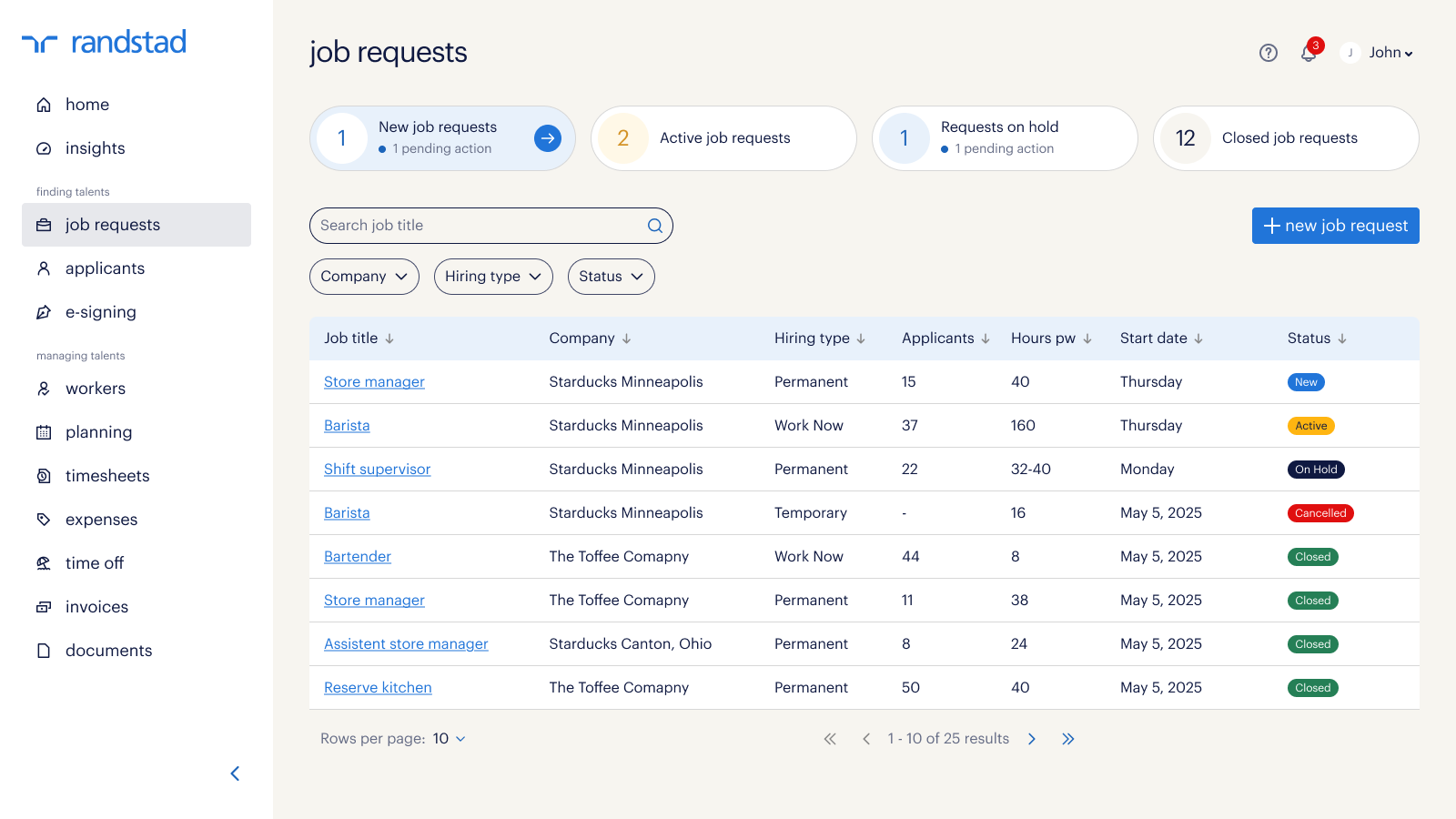
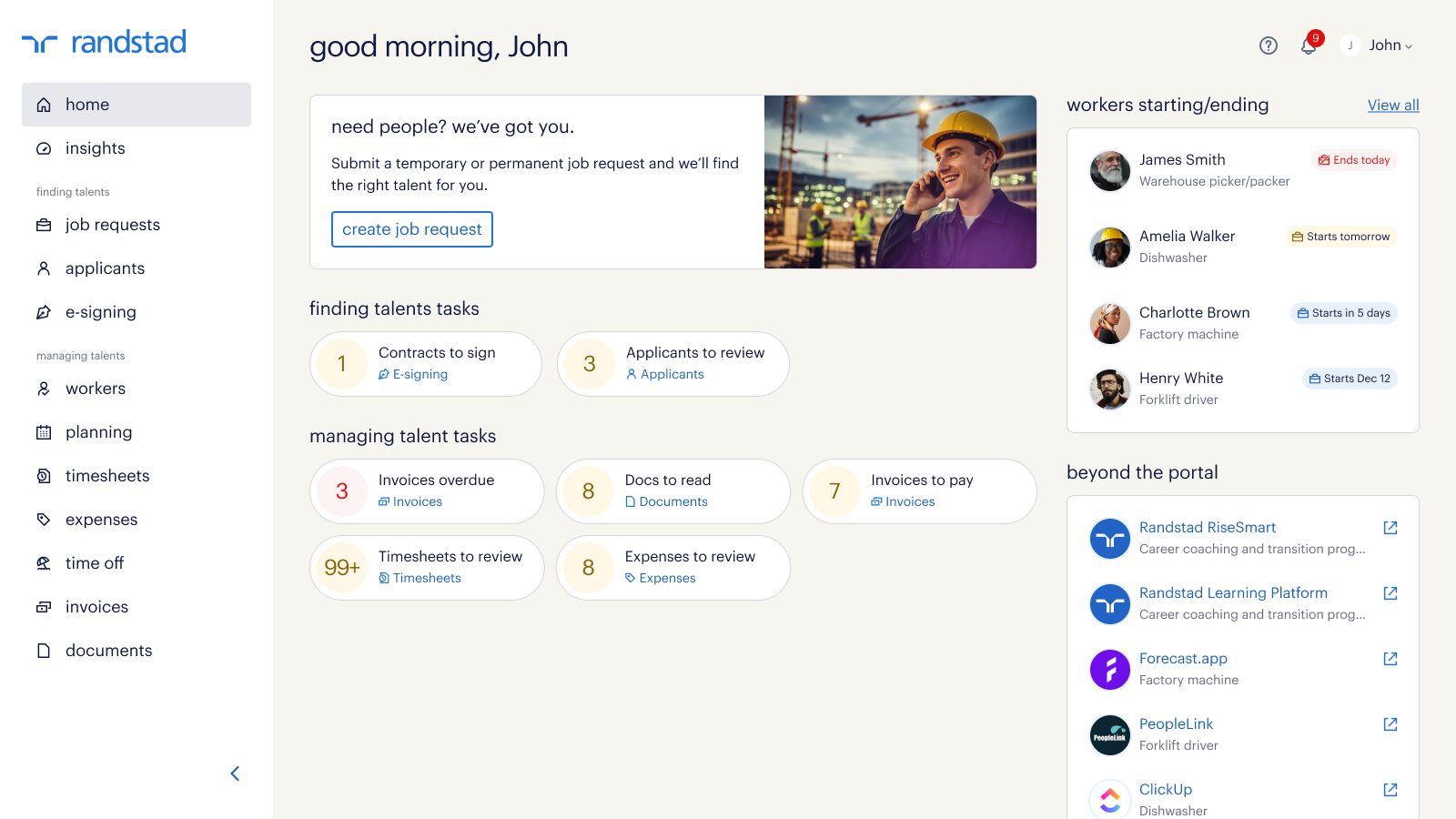
Randstad, one of the world's largest staffing companies, set out to build a client-facing portal that would serve as a digital one-stop-shop across 10+ countries, with a heavy focus on European markets. The challenge: in many of those markets, client relationships were entirely person-to-person, with no self-service infrastructure. In others, disconnected local solutions had created fragmented, inconsistent experiences.
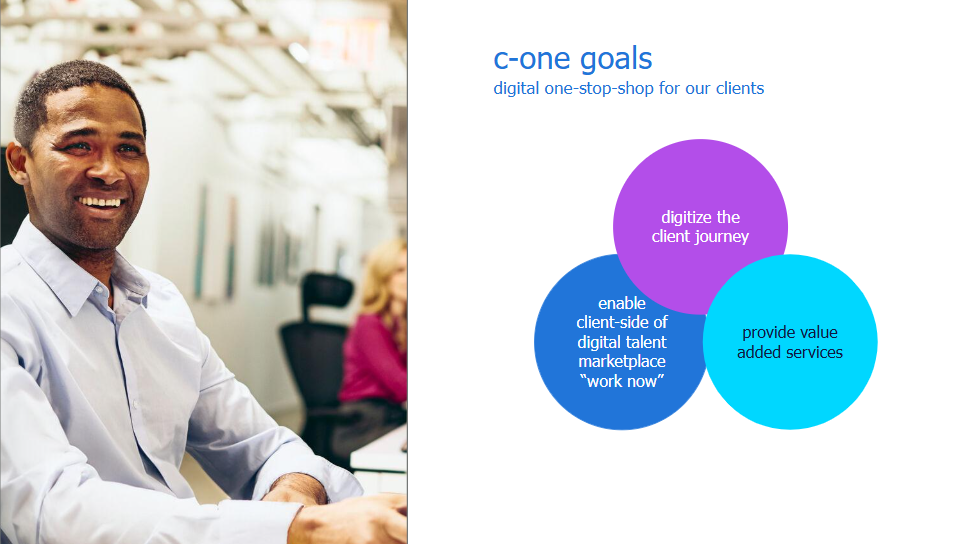
The portal needed to do three things simultaneously — replace legacy local tools, launch in markets where nothing existed before, and shift deeply ingrained client behaviors away from 1-to-1 recruiter communication. Layered on top of that was a new self-service offering called WorkNow, a shift-level staffing product that bet on clients being willing to post and fill roles without recruiter mediation.
The business goals were clear: drive adoption, free recruiters from routine client inquiries, standardize workflows across regions, and position Randstad as a credible digital-first employer services platform.
My Role
I led user research across the full product lifecycle — from early discovery through concept validation to pre-launch usability testing. This included designing studies, recruiting participants across two distinct client segments, running sessions, synthesizing findings, and presenting insights to product and design stakeholders.
Research Approach
The research required two separate tracks because the user populations were fundamentally different. The first was Randstad's traditional client base — enterprises accustomed to dedicated recruiter relationships, for whom the portal represented a significant behavior shift. The second was a newer, emerging segment: smaller businesses already using digital staffing apps, who had bypassed traditional staffing companies entirely. This second group was a growth opportunity, but they came in with very different expectations and mental models.
Concept testing was used early in the process to stress-test features before significant design investment. Usability testing then refined those features through iterative cycles, from rough prototypes to production-ready designs. For WorkNow specifically, we ran multiple rounds because the flow was deceptively complex — tasks that recruiters had always handled invisibly now needed to be understood and completed by clients, without the experience feeling like added burden.
Key Findings
What I Learned
The most significant learning was the cost of assuming a single user mental model across a product this broad. Traditional clients and digital-first clients used the same words — "efficiency," "good matches," "fast" — but meant very different things. Running separate research tracks for each segment was essential, even when it created timeline pressure. Collapsing them into a single study would have produced findings that fit neither group well.
New self-service workflows reinforced something about self-service design more broadly: when you transfer labor from an expert to a non-expert, the product has to absorb the expertise — not just remove the human. It was impossible to understand if our product was really meeting user needs without testing with different types of clients.