Enter the password provided to continue.
Case Study
Research Strategy
Overview
Even great research can fail to stick. During the c-one client portal project at Randstad, I noticed a pattern common on large product teams: the team was receptive to findings, but not connected to them. Insights would land, get noted, and fade as the sprint moved forward. Research was something that happened to the project.
This case study is about changing that — rethinking how research gets shared so the whole team stays in it. The goal was higher UX maturity across the team and a different relationship between research and the people who act on it.
Thought Process
People are more receptive to research findings when they were part of getting them. When a researcher disappears for three weeks and comes back with a polished deck, the team receives conclusions — but they don't own them. They weren't there when a user said the thing that changed everything. They didn't feel the moment the pattern clicked.
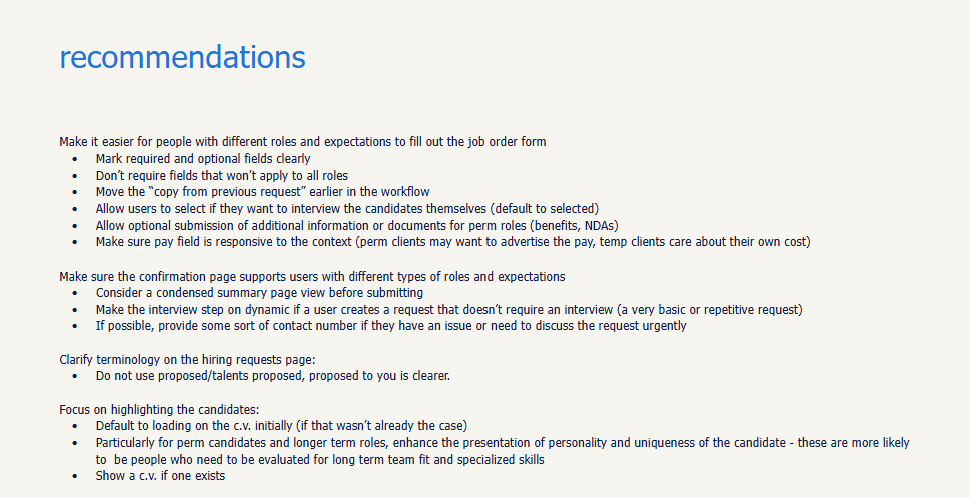
Keep the rigor. Stop treating research as a deliverable. Make it something the team experiences alongside you. That shift — from output to process — changes how insights land, how long they stick, and how likely they are to become action.
Approach
Tradeoffs
This approach came with real costs. Presentations were less polished. Miro is a less mature research tool than Dovetail, so synthesis artifacts were rawer and harder to reference later. Workshops required more time — both to facilitate well and to schedule around everyone's calendars. The work process felt more ephemeral overall, with fewer clean, citable deliverables.
These were conscious tradeoffs. The question was never whether the polished deck was good — it was whether the polished deck was actually producing the outcomes we needed. When the answer is no, the tradeoff is worth it.
Impact & Outcomes
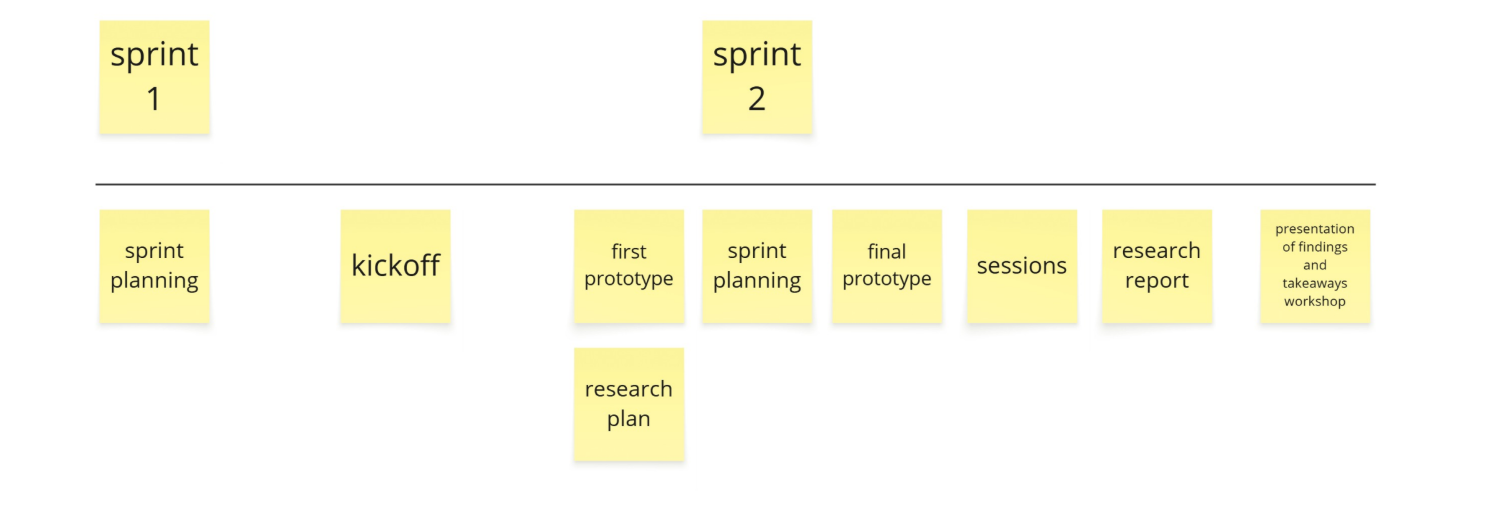
Observer meetings were well-attended and the workshop format was a genuine hit. The team described the process as feeling more "live" and "engaged" compared to past projects — less like receiving a report, more like being part of the discovery.
What I Learned
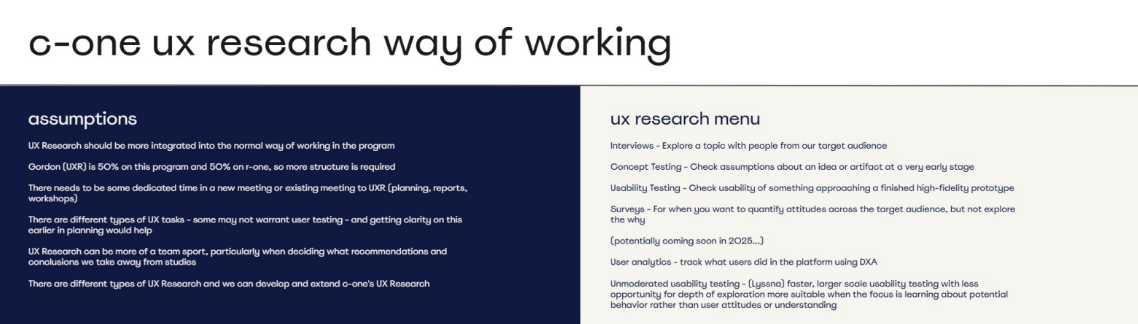
The team sport approach worked better than I expected — and in hindsight, I should have been doing it sooner. The thing that surprised me most was how much team members internalized the user voice. Months later, people were still referencing things specific participants had said. That kind of retention doesn't happen with a slide deck.
The one structural improvement that made the biggest difference: adding explicit prioritization to the workshop. Early versions produced good discussion but left too many actions at equal weight. Once we built a prioritization step in, actionability improved significantly.
Don't worry about territory. The more you invite people in, the more your work matters to them.